Sargassum monitoring · PELAGIA
Know what is heading to your beach. And decide before it arrives.
PELAGIA is ASTRO Labmap's service for monitoring sargassum off a specific coast: when the season starts, what is approaching at sea, how the beach looks today and how the barrier is performing.
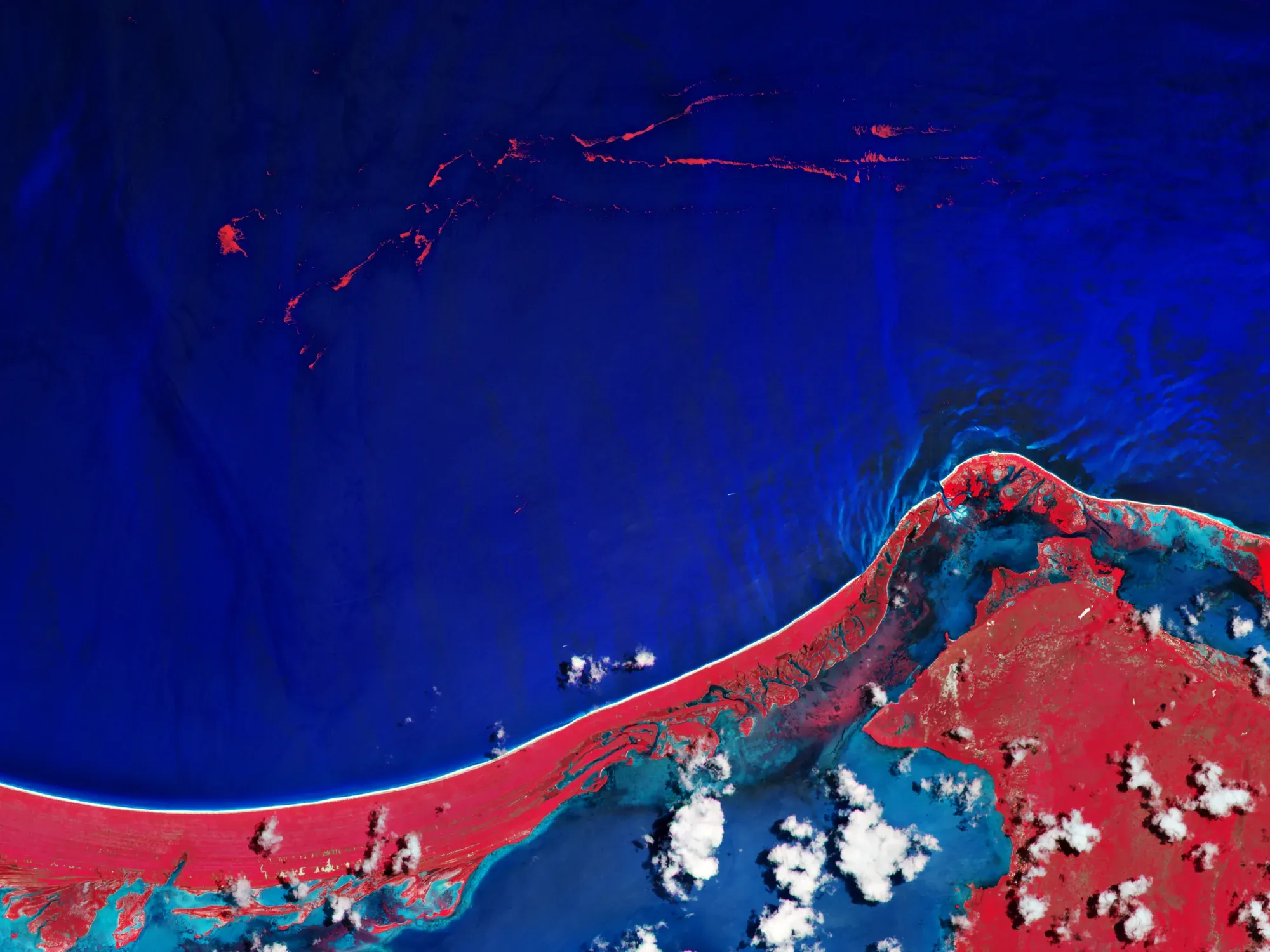
Where we work
- Mexico
- Dominican Republic
- Costa Rica
- Panama
- Colombia
Who it is for
For those responsible for a beach.
Hotels and resorts
Plan cleaning, staff and guest communication around what is approaching, not what has already landed.
Municipalities and coastal authorities
Prioritize beach sections and collection resources with a shared reading of the problem.
Barrier and cleaning operators
Know when and on which side to open the barrier, and measure whether it is working.
Coastal developments
Understand a beachfront's exposure to sargassum before investing or designing.
Ongoing monitoring
Get ahead of sargassum.
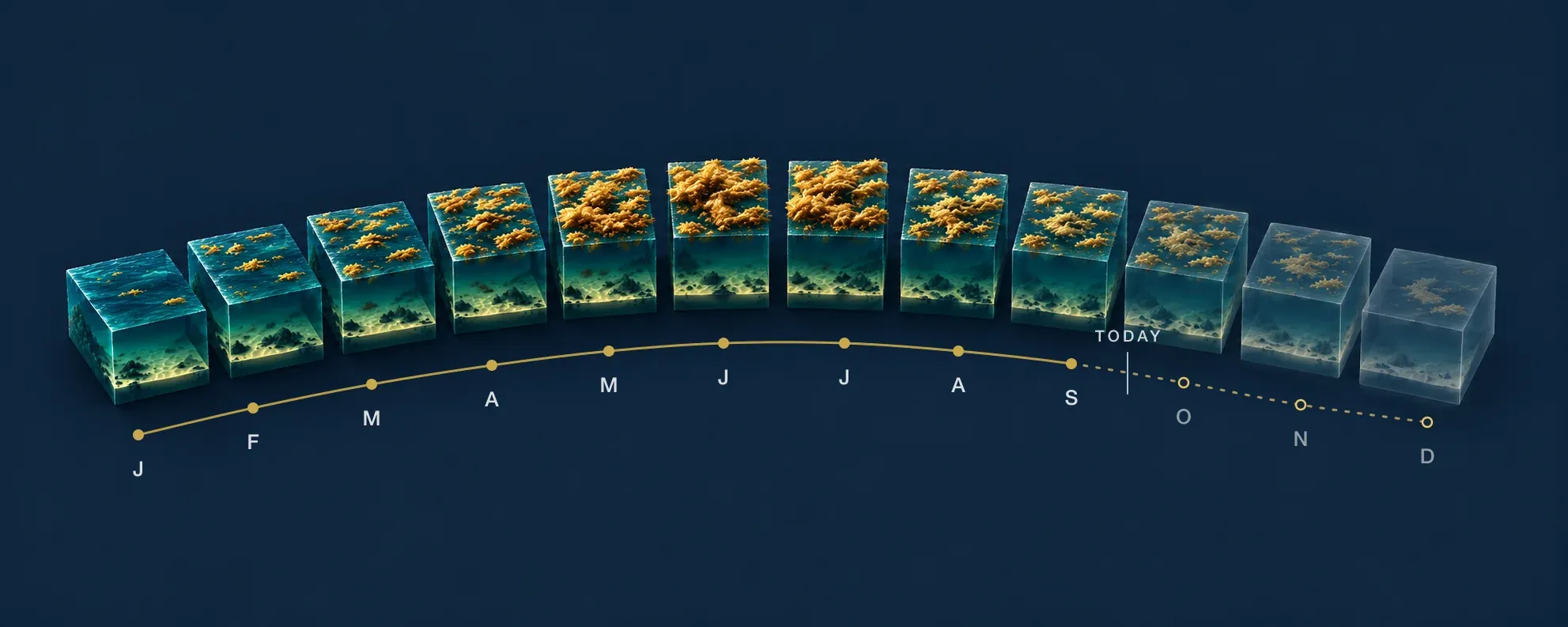
From the whole season to the next landing.
01
Season forecast
When does the season start and how much should we expect?
Estimates when the season will arrive and how large it will be, over several time frames, based on the history of that same beach.

02
Beach and barrier diagnosis
How does each section of the beach look today?
Measures beached sargassum and brown tide along the beach, section by section, and assesses the barrier's effectiveness where there is one.

03
Wind monitor
Is the wind pushing sargassum toward the coast?
Relates the orientation of the coast to the wind to anticipate landings and show which end of the barrier channel to open.
04
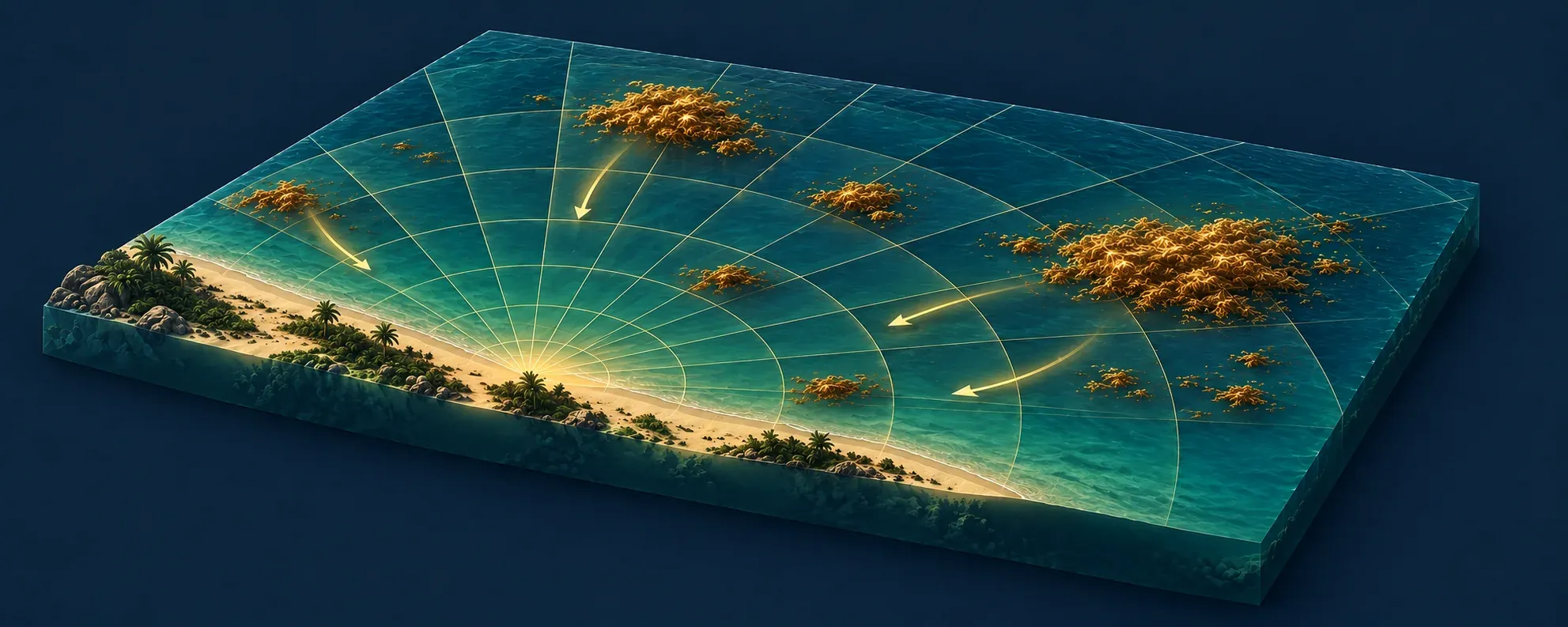
Landing early warning
What is approaching at sea, and when would it arrive?
Splits the sea off the coast into sectors and estimates the floating sargassum, the days until it arrives and the amount on its way in each one.
One-off studies
Invest with a clear picture.
Before you install or build.

Barrier mooring pre-feasibility
Where a barrier can be anchored and what load from the sea the mooring must withstand, before buying or installing it.
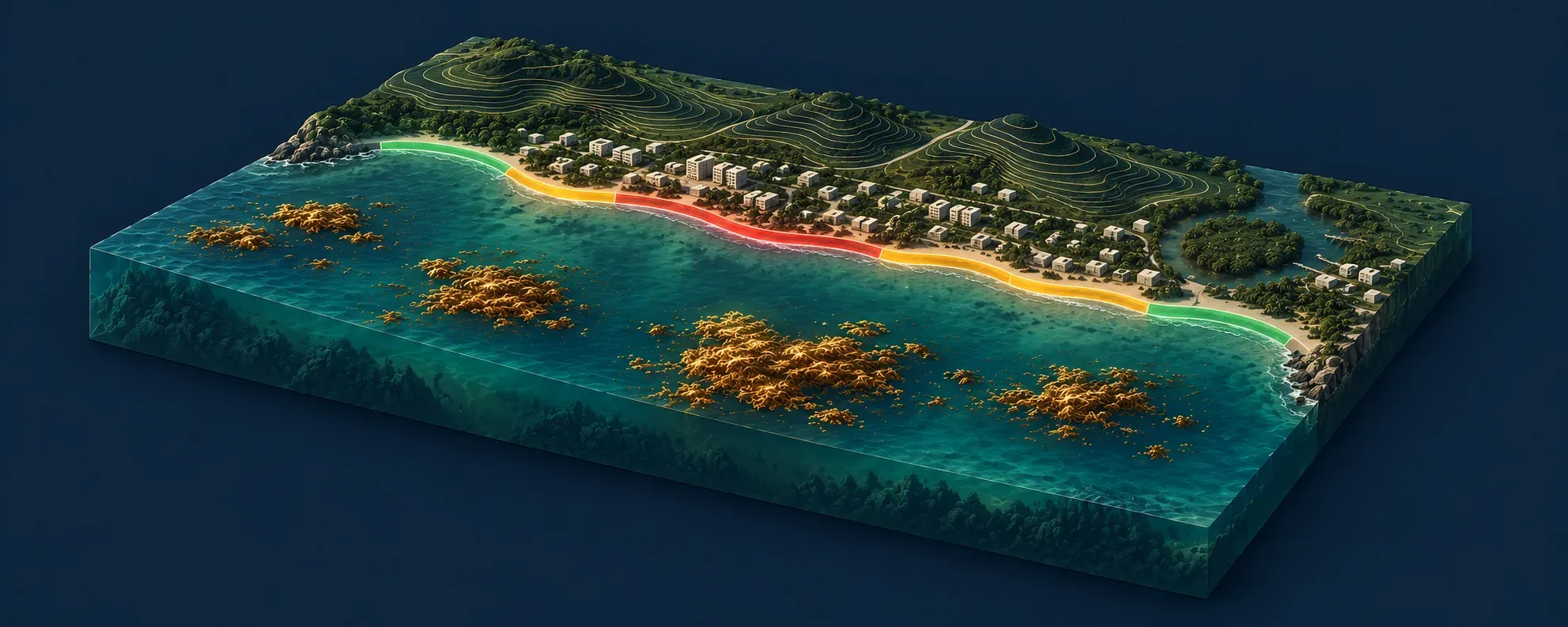
Integrated coastal vulnerability
Combines the coast's classic vulnerability (elevation, slope, population, land use) with sargassum pressure in a single traffic light per section.
How it works
From your coast to a decision.
01
Site registration
We register your stretch of coast in PELAGIA. It is where monitoring begins.
02
Monitoring design
Together we define what to monitor and which studies answer your decisions.
03
Review and decide
Results reach the PELAGIA panel and reports for your team.
Questions
Frequently asked questions.
How is this different from public sargassum maps?
Public maps show sargassum at a regional scale. PELAGIA works on your coast: your beach sections, your barrier and the sea in front of it.
Is it useful if I already have a barrier?
Yes. The diagnosis assesses its effectiveness and the wind monitor helps decide which end of the channel to open. If you don't have one yet, the mooring pre-feasibility study helps plan it.
What does my team get?
Access to the PELAGIA panel with the results for your coast, plus reports your team can share and act on.
What do I need to get started?
Just the location of your stretch of coast and the decisions you need to make. With that we prepare a proposal and register the site in PELAGIA.
Where do you work?
In Latin America and the Caribbean, with a focus on Mexico, the Dominican Republic, Costa Rica, Panama and Colombia.
How much does it cost?
It depends on the site and on what you need to monitor or study. Tell us about your case and we will send you a proposal.
Proposal
Request a proposal for your coast.
Tell us where your beach is and what you need to decide. We will reply with a proposal.
Direct contact
- ASTRO Labmap